
When Fred met Caruso!
The time the world’s first record producer nearly burned down the Vatican and ended up changing music history.
It was quite the trip
‘FEE EXORBITANT FORBID YOU TO RECORD’ screamed the telegram from head office. No nuance, no shades of grey there. This was as unequivocal as it got.
The recipient, Fred Gaisberg, had always been and would always remain the loyal company guy. But he knew that this time was different. He had no choice but to completely ignore this humiliating missive. If he didn’t, if he followed his orders, all he’d be left with would be a failed venture garnished with a personal rejection by Pope Leo XIII and a global newswire story of how he and his brother had almost burnt the Vatican down. And that was NOT the Gaisberg way.
Fred became the chief talent scout and producer for The Gramophone Company in London soon after it was founded in 1897. The American chose who to record and often managed the recording sessions personally, frequently alongside his younger brother Will who he had trained up to also be a record producer.
This trip to Italy came at the instigation of the company’s agents there, brothers William and Alfred Michelis. Given its rich musical heritage and culture, Italy was an obvious source of music for The Gramophone Company’s burgeoning catalogue. The Michelis brothers were as excited about the potential for this exciting new gramophone technology as everyone else in the company and it would be fair to say that sometimes their enthusiasm led them to somewhat over-promise.
William Michelis had wanted to record the Pope’s private choir, the Capella Sistine, in the Sistine Chapel with potentially the Pontiff himself speaking on the recording for some time. Now, through his contact, a captain in the Vatican’s Swiss Guard who was also the Pope’s own nephew, he had renewed confidence in his ability to deliver this artistic coup. So, increasingly confident, he asked Gaisberg to come over.
Alfred Michelis meanwhile was keen for this Italian excursion to also take in the world-famous Scala season in Milan to make a live recording of an opera – something that had never even been attempted before, let alone realised.
So, in February 1902, Fred and Will Gaisberg were dispatched to Italy to make these ambitious plans a reality.
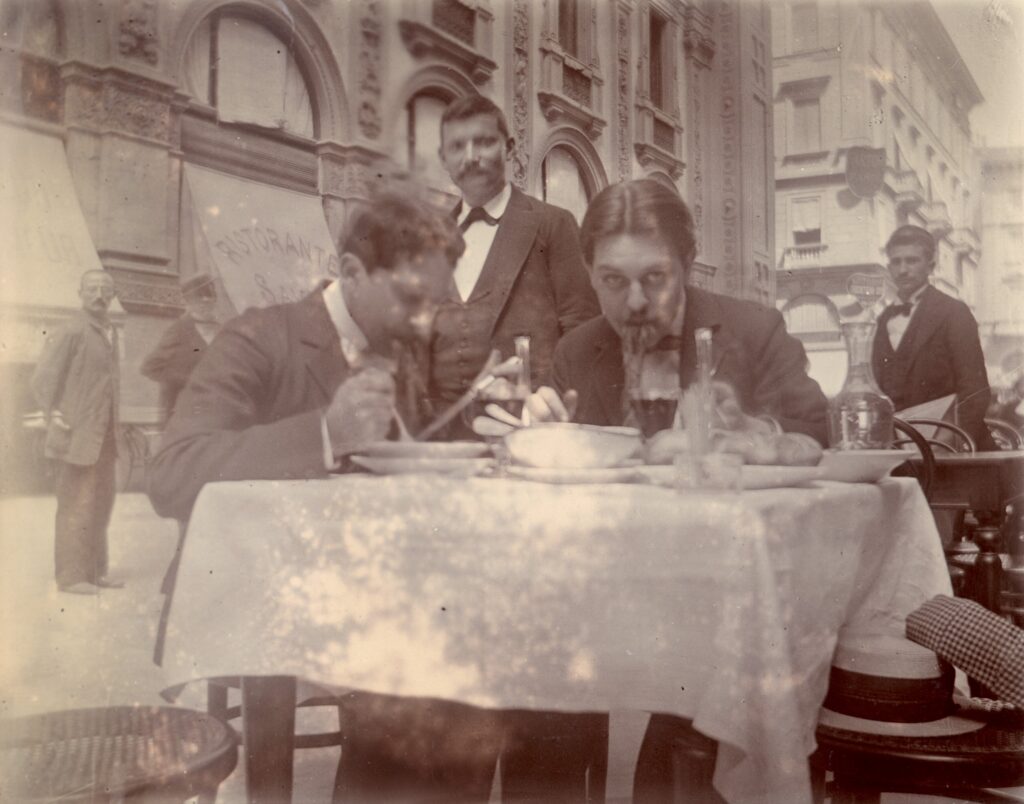
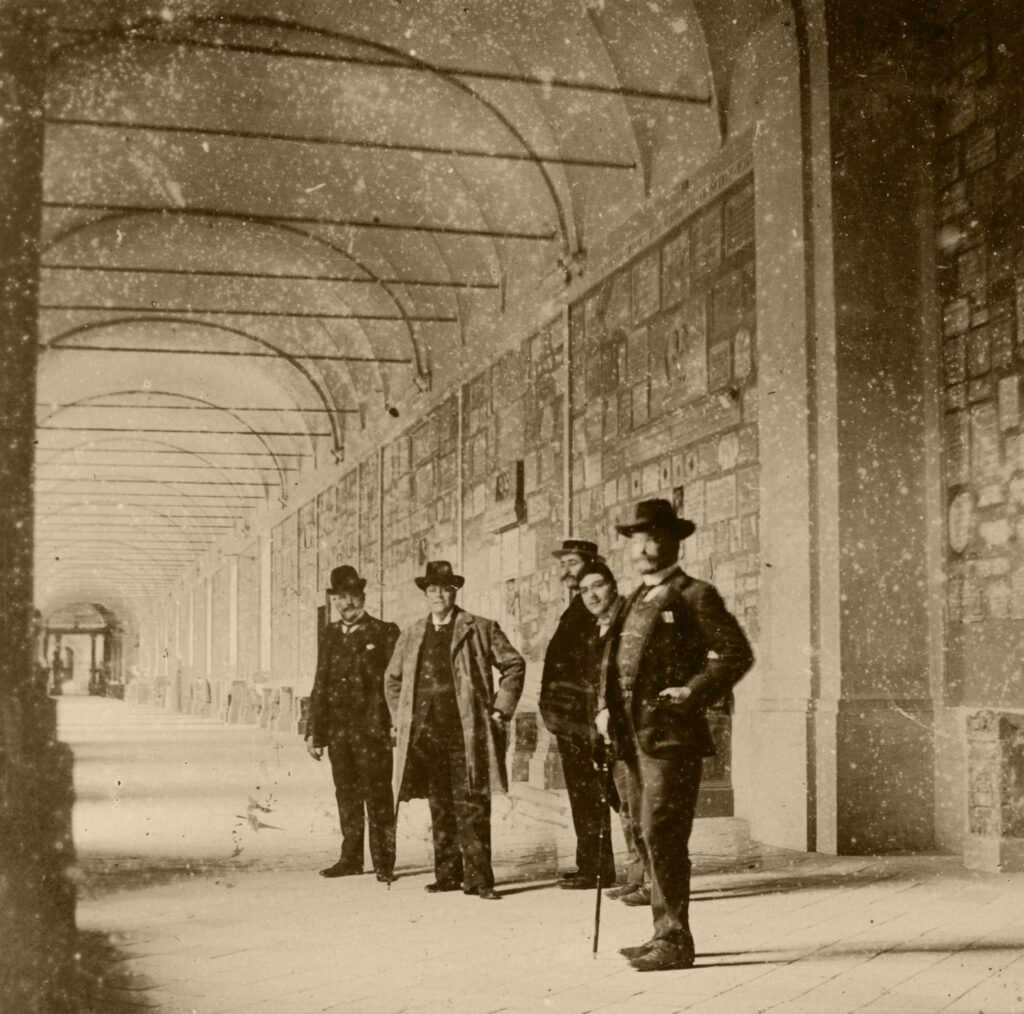
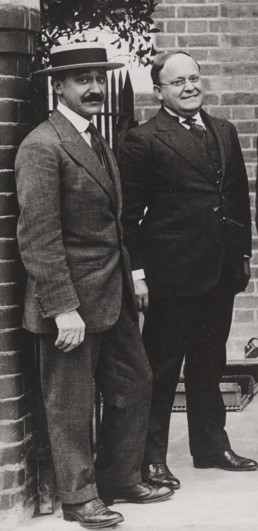
L to R: Fred & Sinkler in Milan c 1900, Gramophone Co., Italy c 1900 , Brothers Fred and Will Gaisberg
It soon became clear that the main aim of the visit, a papal recording, was not going to happen. The now 91-year-old Pope had not, as it turned out, ever given even a hint that he might be amenable to the idea and, similarly, the Vatican authorities never had any intention of allowing recordings of any kind to be produced in the hallowed Sistine Chapel.
However, despite those two firm rejections, the Vatican did agree to instead make available the Sistine Chapel Choir for recording in a different, though still exquisitely beautiful, part of the palace.
The session was highly productive and included some of the only recordings in existence of the male sopranos in the choir, the ‘castratos’, as the practice was by this point illegal.
However, as the session was coming to an end, a short circuit from a battery ignited some packing materials and in no time, flames shot up and rapidly began spreading.
Horrified, but showing their characteristic quick thinking, the Gaisbergs, aided by the Michelis brothers, used their overcoats to beat down the spreading flames, successfully extinguishing the fire.
All of them were burned by the flames, but they had avoided damage to any of the wax masters they had so painstakingly made with the choir. Oh and no damage either to one of the most famous and richly decorated buildings in the world as well – although that didn’t stop an opportunistic Reuters journalist publishing a story that went worldwide, breathlessly covering the outbreak of fire in the Holy See due to the careless acts of two reckless Americans.
Things didn’t go to plan in Milan any more than they had in Rome. La Scala point blank refused to allow any recording technology into the building. So, bribes were paid and equipment was smuggled in and hidden away behind a screen, ready for use. Unfortunately, the cases for the equipment were left in a dark corridor where the venue’s managing director quite literally stumbled into them, badly injuring his leg and making him more than a little angry.
Duly busted, the team worked double quick to remove all the kit without it being confiscated by the theatre or the authorities. This they managed, but a live La Scala performance was now, definitively, never going to happen.
Blocked from any possibility of making recordings, it then turned out that getting into La Scala simply to hear just one of the performances was a nightmare as well. It was peak season and not a ticket was to be had anywhere. However, in his usual fashion, Alfred Michelis managed to blag everyone inside and into a box that they thought was not being used that evening by its owners.
They thought wrong. Just as the performance began, they were interrupted by the box’s actual owners, a very unimpressed Italian aristocrat who wanted to know who these squatters in his box were.
A huge row ensued with Alfred, feeling deeply aggrieved at being insulted in front of his esteemed American guests, challenging the Baron to a duel. And if that wasn’t enough, the challenge was actually accepted with poor Will Gaisberg dragged in as Michelis’ second!
Thankfully calmer heads prevailed in the morning. The duel was off, and, to add to the much lightened mood, Alfred Michelis’ had managed to secure some seats for everyone to see a performance of the new opera ‘Germania’ which had just opened to a sensational response, in no small part due to the performance of the lead tenor, one Enrico Caruso.
This was the first time Fred Gaisberg had ever heard Caruso and he was utterly captivated, determined to record him without delay. With Michelis they reached an agreement with him that he would make 10 recordings in a single session for the then unheard-of fee of £100.
It was this proposal that Fred Gaisberg cabled back to Gramophone Company headquarters in London for approval, with the strongest recommendation he could give that this young man was exceptional and had to be recorded.
When he saw the ‘FEE EXORBITANT FORBID YOU TO RECORD’ response returned to him so rapidly and so firmly Gaisberg knew the powers-that-be were never going to bend. So, failing to get the answer he wanted, he instead chose to ignore the one he got. If it came to it, he would cover the fee and costs himself, so determined was he to capture this musical magic.
And magic it was. Those 10 recordings utterly transformed the still very young record industry. As well as being big sellers in their own right and helping introduce many people to this new entertainment medium, having an artist the stature of Caruso making records opened the floodgates for other top tier artists to do the same. Up to that point, most had been very reluctant to being recorded, seeing it as far inferior to their true artistic calling, namely performing live on stage. Caruso embracing recording so wholeheartedly instantly made that view obsolete. So significant was his contribution that the industry really can be divided into pre-Caruso and post-Caruso eras.
Plus, the idea of being recorded clearly did settle in the papal mind. The following year, 1903, at age 93, Leo XIII became the then oldest person ever to be recorded, saying prayers and giving a blessing. Not by Fred Gaisberg and not even on a gramophone but on its great rival format, the cylinder. At least, as far as we know, no fire was involved.
Main image: Enrico Caruso circa 1900