
Unsung heroes: Trevor Williams
Here at the EMI Archive Trust we love returning the spotlight to enormously consequential people in the history of EMI and the music industry who are not so well known any more but absolutely deserve to be so. This time, the very wonderful and amazing Mr Trevor Williams.
As will become clear, it really is no exaggeration to say that the history of EMI starts when it did because of Williams. It’s also because of him and his prescient judgement that British artists were actually recorded and released right from the start of the UK record industry. And the black and white Friesian cows you see in dairy farms across Britain? That’s him as well. But we’ll get to the bovines a bit later on.
The gramophone as both a recording and playback machine was a product of the genius brain of Emile Berliner. Born and raised in Germany, he emigrated to the US aged 19 in 1870, developing and perfecting his invention over many years before gaining a patent for it in 1887.
Over the course of the 1890s Berliner further refined his groundbreaking technology, building a team of supporters, colleagues and eventually investors to start commercialising the idea with the launch of the United States Gramophone Company in October 1895.
Berliner soon turned his attention to kicking things off in Europe and the man he tasked with the job was William Barry Owen, the legal advisor in Berliner’s New York office. So, in 1897, Owen crossed the Atlantic and, in a very knowing and intentional show of his ambitions, of his arrival in town, installed himself in one of London’s smartest hotels, the Hotel Cecil.
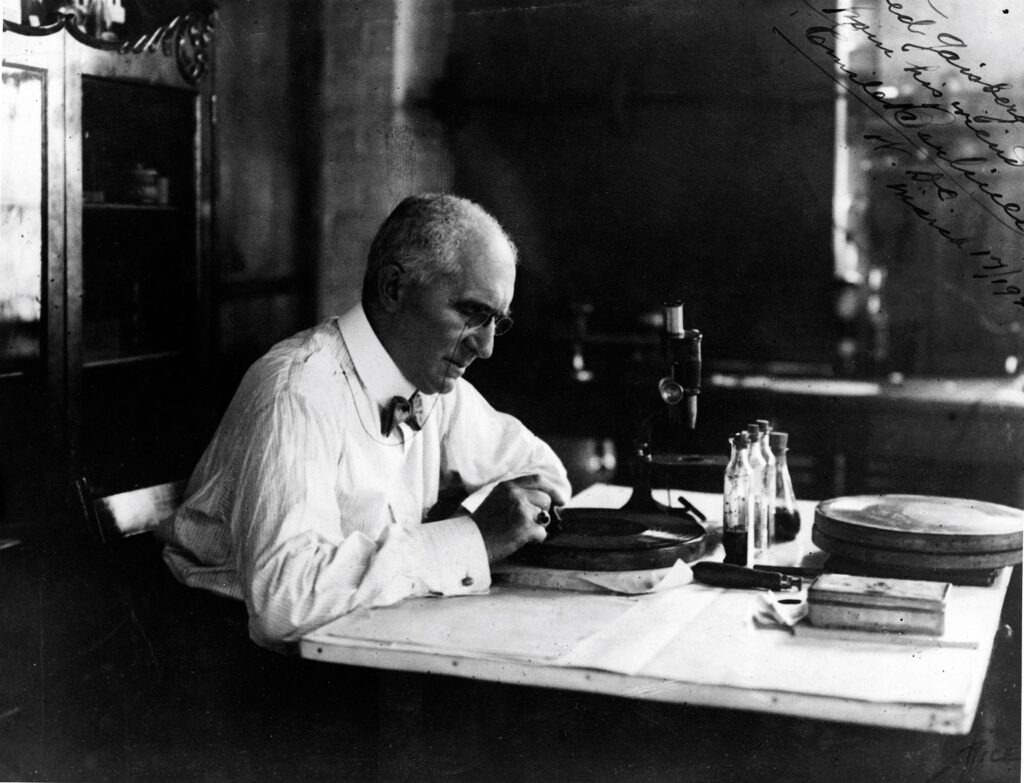
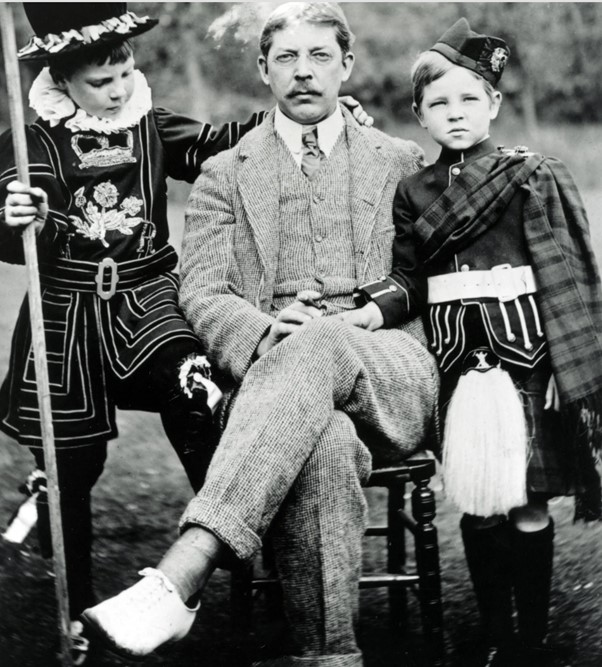
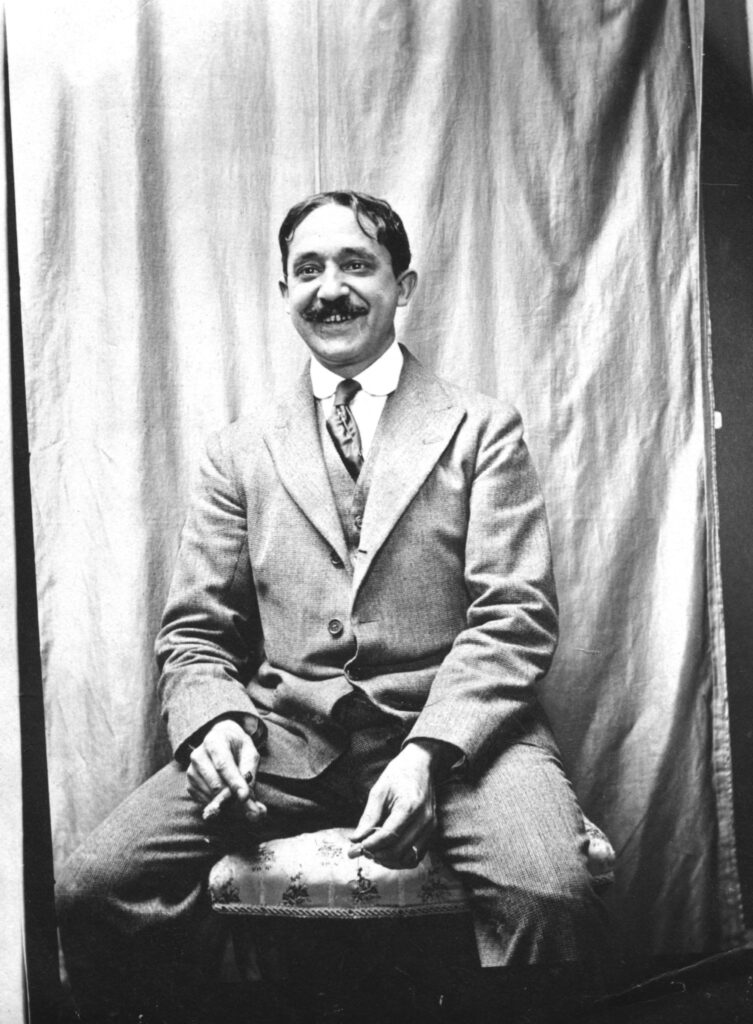
L to R: Emile Berliner, Willian Barry Owen and Sons, Fred Gaisberg
From this luxury HQ Owen imported a number of gramophone players and discs from the US and set about creating a market and finding local investors to back the nascent company, which he’d already named The Gramophone Company. Even though it technically, legally, wasn’t actually anything of the sort. A company that is.
Owen wasn’t the sort to let legal technicalities like this slow him down and it was in his search for investors that he came into contact with Trevor Williams, a lawyer from a wealthy Welsh land-owning family. This combination meant that Williams brought to the table both crucial legal knowledge and, even more crucially, cash. Lots of it. Both from himself and his similarly rich friends and family members.
The two met soon after Owen’s arrival in London and Williams was keen to get involved from the off. He knew a great opportunity when he saw one. So, in February 1898, the pair travelled to the US to meet Berliner and his key lieutenants. There they concluded an agreement that in return for an investment of a princely £5000 Williams would become chairman and Owen managing director of The Gramophone Company.
Now, almost instantly, well-financed, the company was fully off and away and was on course to grow and expand across Europe and beyond very rapidly. Owen’s plan all along was to import gramophones and records from the US. The European business, run from London, would be purely a sales and distribution arm.
Williams was having none of it. If they were going to reach their full potential, they must be able to record British and European artists in addition to imported American recordings. As Williams had brought in the money that enabled The Gramophone Company to fully exist, his view was the one that mattered. And so just like that, The Gramophone Company would now create and produce its own music and discs.
The London team asked Berliner to send over one of his experts to set up and run the new recording arm. It would also be necessary to set up a factory for these European recordings as sending them back to the US for pressing made no sense. Berliner chose Fred Gaisberg as the recording guy. But fearing the power of British trade unions, he chose Germany instead. He asked his nephew Joseph Sanders to travel to Hannover in Germany where Berliner had grown up and where his brother still was, owning and running a telephone factory.
Fred Gaisberg was an outstanding talent spotter and recording engineer and the body of work he created established The Gramophone Company as the premier record company in the world. And the German factory evolved into the prestigious classical label Deutsche Grammophon.
In just over a year, Williams had turned The Gramophone Company from a one-man band (although a highly impressive and driven man it has to be said) to a real and viable business, and through his shrewd insistence on local recordings ensured that all the amazing music recorded by the company from 1898 onwards came into being.
He remained the chairman of the company for over three decades until his retirement in 1930, just before The Gramophone Company merged with rival Columbia to become EMI in 1931. He didn’t go anywhere though as he was one of the founding directors of EMI and remained so until his death in 1946.
And the whole cow thing? Well his family were major farmland owners in his native Wales so he did have genuine expert knowledge and was a really, really, big fan of Friesian cattle. He was president of the British Holstein Friesian Cattle Society for many years in which role he was instrumental in persuading the then Board of Agriculture to in 1914 overturn its previous ban and allow the breed to be brought over from Holland. He then literally practised what he preached by keeping his own herd of Friesian cattle and today the majority of the UK dairy herd is a variation of the breed.
Getting The Gramophone Company off the ground, ensuring non-American music and artists were recorded, and really knowing his stuff about dairy cows. Trevor Williams, you’re a legend. They don’t make ‘em like you any more.
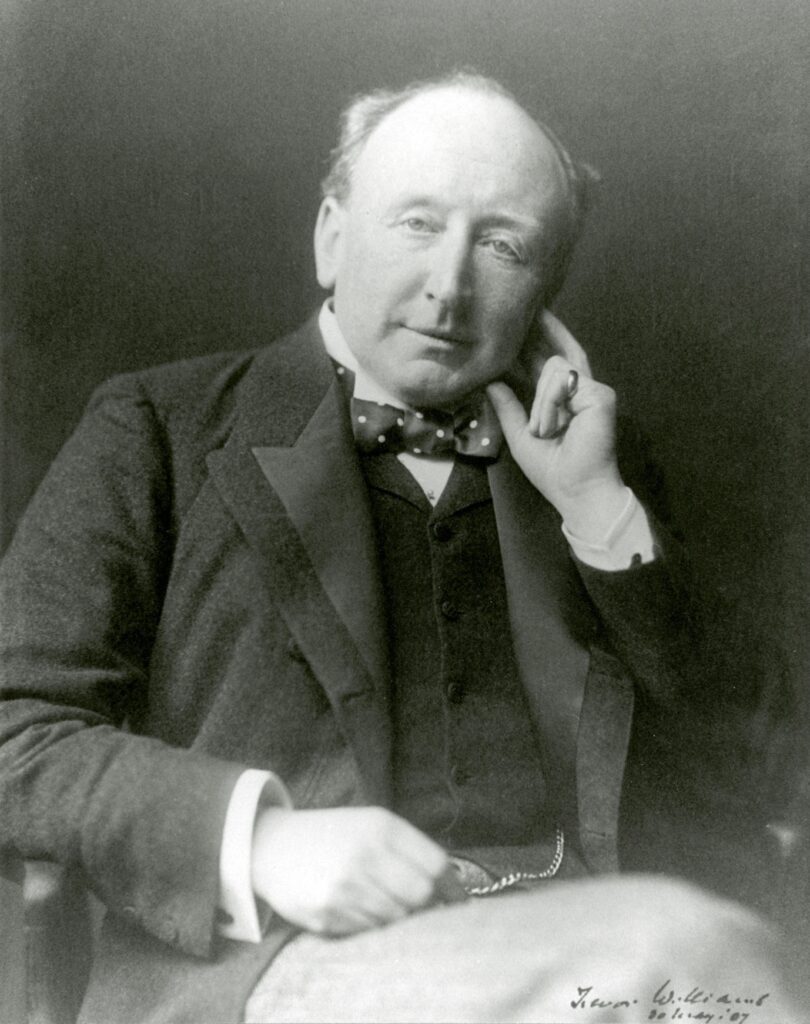
Edmund Trevor Lloyd Williams